- Aug 6, 2024
Optimizing Your Social Media Content for SEO
- Samantha Markey
- 1 comment
How to make your content show up in more searches.

I love the power of SEO, but if I’m being honest, for a long time, I was a little afraid of it. SEO seemed like a complex and technical world reserved for website experts. When it comes to websites, I’m sure there’s more to know (and I am definitely not a website expert), but I’ve discovered that for social media, SEO often comes down to the words you use. And trust me, it’s simpler than you think!
Optimizing your social media profiles and posts for search can significantly increase your visibility, helping your content reach a broader audience. By incorporating relevant keywords in your bio, captions, and hashtags, you can boost your chances of appearing in search results.
Did You Know?
Did you know that social media profiles consistently rank among the top search results? Particularly for branded keywords, social media profiles are often front-and-center, immediately following a brand’s website result. On Google, social media channels are prominently listed on the results pages and the knowledge panel, the box located on the right side of the screen that features specific information about the query.
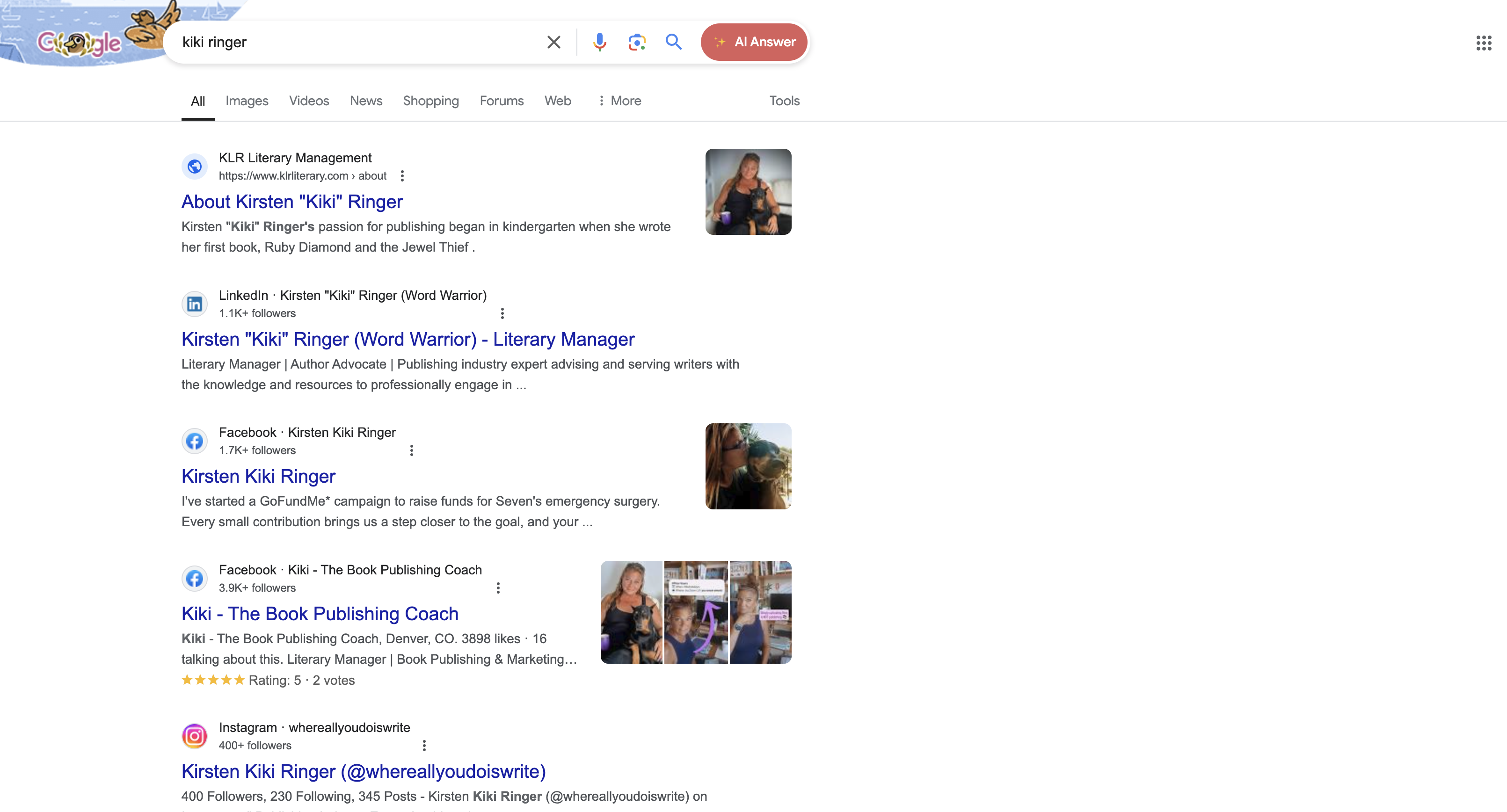
Take Kirsten "Kiki" Ringer, the owner and coach at KLR Literary Management, as an example. Kiki, a founding member of our Plandipity Doer's Community, makes us incredibly proud with her social media presence. When you search for her on Google, her social profiles are displayed in the knowledge panel, showcasing her LinkedIn, Facebook, and Instagram accounts. The search results page also includes previews of her most recent posts, further highlighting the strong relationship between SEO and social media. This visibility underscores the importance of optimizing your social media profiles and content for search engines to enhance your brand’s online presence.
Optimizing your social media content for SEO is a game-changer for increasing your visibility and reach. By integrating relevant keywords, creating engaging content, and effectively using hashtags, you can ensure your social media posts are discoverable and resonate with your audience. Start implementing these tips today and watch your social media presence grow! And remember, don’t be afraid of SEO—embrace it as a powerful tool to elevate your brand.Three Things to Consider When Writing SEO-Optimized Captions
So here are a few tips to help get you started and to ensure your social media captions are optimized for SEO, here are three key considerations:
KEYWORDS
-
Keyword Integration Keywords are the foundation of SEO. Just like on your website, using relevant keywords in your social media captions can help your content get discovered. Here’s how to do it effectively:
Research Keywords: Use tools like Google Keyword Planner or Ubersuggest to find keywords related to your content. Look for terms that have a high search volume and are relevant to your niche.
Natural Placement: Integrate these keywords naturally into your captions. Avoid keyword stuffing, which can make your text look spammy. Instead, weave them seamlessly into your sentences to maintain a natural flow.
Long-Tail Keywords: Consider using long-tail keywords, which are more specific phrases that users are likely to search for. For example, instead of just “social media tips,” you might use “social media tips for small business owners.”
Pro Tip: Consider the words your audience would be using to search for the topic you’re sharing about. Sometimes we use terminology that our audience wouldn’t, and that is just as ineffective as not using keywords at all.
If you have embraced Ai to help you brainstorm and even write your content then be sure you share with it the keywords, branded hashtags, nad phrases that are relevant to your audience, brand and your content.
ENGAGING & RELEVANT CONTENT
While keywords are important, the content of your caption should also be engaging and relevant to your audience. Captions that provide value are more likely to be read, shared, and engaged with, which can boost your SEO indirectly.
Value-Driven Content: Share tips, insights, or stories that resonate with your audience. This not only encourages engagement but also makes your posts more likely to be shared.
Call to Action: Include a clear call to action (CTA) in your captions. Encouraging your followers to comment, share, or click a link can increase engagement, which is a positive signal for SEO.
Relevance: Ensure your caption is relevant to the image or video you’re posting. Consistency between your visual content and the accompanying text is crucial for user experience and SEO.
HASHTAGS
Effective Use of Hashtags Hashtags play a significant role in social media SEO. They help categorize your content and make it discoverable to users searching for specific topics.
Did you just ask me " Are hashtags still relevant?" The answer is YES! Your hashtag strategy should be a little different for each platform based on their algorithm but the one thing I will say it's important to focus on quality, hyper-relevant hashtags — even using 5 or 10 hashtags is better than none in most cases.
There are five main types of hashtags to consider:
Descriptive hashtags: Which describe the content of your actual post, like #OfficeHoursForAuthors or #SparklyNails
Location-based hashtags: Like #HistoricDowntownBrighton or #MileHighCity
Branded hashtags: For campaigns, events, or employer branding, like #MTSReelsChallenge
Industry hashtags: That describes your niche, like #SocialMediaCoach or #PersonalOrginizer
Community-focused hashtags: To bring your community together, like #IAmADoer or #WomenOver40
Descriptive hashtags: Which describe the content of your actual post, like #PublishingTips or #EyewearFashion
There’s no secret formula for how many of each category you should include, but keeping them in mind can provide hashtag inspiration and guide your captions.
Research Hashtags: Use tools like Hashtagify or Instagram’s search function to find trending and relevant hashtags. Look for a mix of popular and niche hashtags to maximize reach.
Brand-Specific Hashtags: Create and use brand-specific hashtags to build your brand identity and encourage user-generated content. This can increase your visibility and foster a sense of community.
Limit Quantity: While it might be tempting to use a lot of hashtags, it’s best to limit the number to avoid looking spammy. Aim for a mix of 5-10 well-researched hashtags per post.
Looking for more tips and hacks to increase the effectiveness of your social media marketing? Come join me and the Plandipity Doers for monthly coaching, accountability, and amazing resources that make you wonder why you struggled with it for so long.

Happy Creating!
Samantha
