- Aug 20, 2024
Creating a Brand Guide: Your Roadmap to Consistency and Growth
- Samantha Markey
- 0 comments
As an entrepreneur, you've poured your heart and soul into building your business. Getting your brand’s essential elements down on paper from the start is crucial for staying consistent as you grow. But as you begin outsourcing or hiring help, maintaining a consistent brand identity can become even more challenging. This is where a well-crafted brand guide becomes your best friend.
A brand guide is more than just a document; it's a strategic tool that ensures your brand is presented consistently across all platforms and by everyone on your team. By putting your brand's vision, values, and visual identity on paper, you create a blueprint that not only strengthens your brand but also makes it easier for others to understand and represent it correctly.
Let’s walk through each section of a brand guide, why it’s important, and what you should include.
1. Brand Story
Why It’s Important: Your brand story is the emotional core of your business. It connects you with your audience by sharing the journey that led to your brand’s creation, the challenges you’ve overcome, and the values that drive you. A compelling brand story makes your brand relatable and memorable.
What to Include:
Origin Story: How did your brand come to be?
Challenges: What obstacles have you faced, and how did you overcome them?
Values: What beliefs are at the heart of your business?
Impact: What difference does your brand make in the world?
2. Vision, Purpose, Mission
Why It’s Important: These three elements form the foundation of your brand’s identity and strategy. They guide every decision you make and keep your team aligned with your long-term goals.
What to Include:
Vision: Your long-term goal—where you see your brand in the future.
Purpose: The core reason your brand exists beyond making a profit.
Mission: The actions you take to achieve your purpose and move towards your vision.
Visual Tip: Consider creating an infographic that visually connects these elements, helping everyone on your team understand how they interrelate.
3. Core Values
Why It’s Important: Core values are the guiding principles that shape your brand’s culture and decision-making process. They influence how you interact with customers, create products, and build your team.
What to Include:
A list of 3-5 core values.
A brief description of what each value means and how it’s reflected in your business.
4. Key Audiences
Why It’s Important: Knowing who your target audience is helps you tailor your messaging and products to meet their needs. It ensures that your brand speaks directly to the people who are most likely to become loyal customers.
What to Include:
Demographics: Age, gender, occupation, etc.
Psychographics: Interests, values, lifestyle.
Pain Points: What problems are they facing that your brand can solve?
5. Logo Usage
Why It’s Important: Your logo is the most recognizable aspect of your brand. Consistent logo usage ensures that your brand is easily identifiable and maintains its integrity across all platforms.
What to Include:
Variations: Approved versions of your logo (color, black and white, horizontal, vertical).
Clear Space: How much space should be left around the logo.
Placement: Guidelines on where and how the logo should appear in different contexts.
6. Brand Colors
Why It’s Important: Colors are a powerful tool in branding. They evoke emotions and help your brand stand out. Consistent use of brand colors ensures a cohesive visual identity.
What to Include:
Primary Colors: Your main brand colors.
Secondary Colors: Additional colors that complement your primary palette.
Color Codes: Hex, RGB, and CMYK values for each color to ensure consistency across digital and print media.
7. Typography
Why It’s Important: Typography influences how your brand’s message is perceived. The fonts you choose can convey professionalism, creativity, warmth, or boldness.
What to Include:
Primary Fonts: Main fonts used for headlines and body text.
Secondary Fonts: Fonts for subheadings or special elements.
Usage Guidelines: Instructions on when and where to use each font, including size, weight, and spacing.
8. Graphic Elements
Why It’s Important: Graphic elements like icons, patterns, and illustrations add visual interest and help to create a cohesive brand identity. They make your brand instantly recognizable.
What to Include:
Icons: Style, color, and size guidelines.
Patterns & Textures: Where and how to use them.
Illustrations: Style and usage rules, especially if you use custom illustrations.
9. Brand Voice
Why It’s Important: Your brand voice is how your brand communicates with the world. It’s crucial for maintaining a consistent tone and style, whether you’re posting on social media, writing an email, or crafting website copy.
What to Include:
Tone: Overall mood of your communication (e.g., friendly, professional).
Language Style: Formal or informal language, jargon, etc.
Personality: Key traits that define your brand’s character.
10. Photography & Video
Why It’s Important: Visual content is a major part of how your brand is perceived. Consistent photography and video styles ensure that all your visual content aligns with your brand identity.
What to Include:
Style: Whether your visuals are bright, moody, vibrant, etc.
Subject Matter: What should be featured—people, products, environments.
Technical Guidelines: Framing, lighting, and editing preferences.
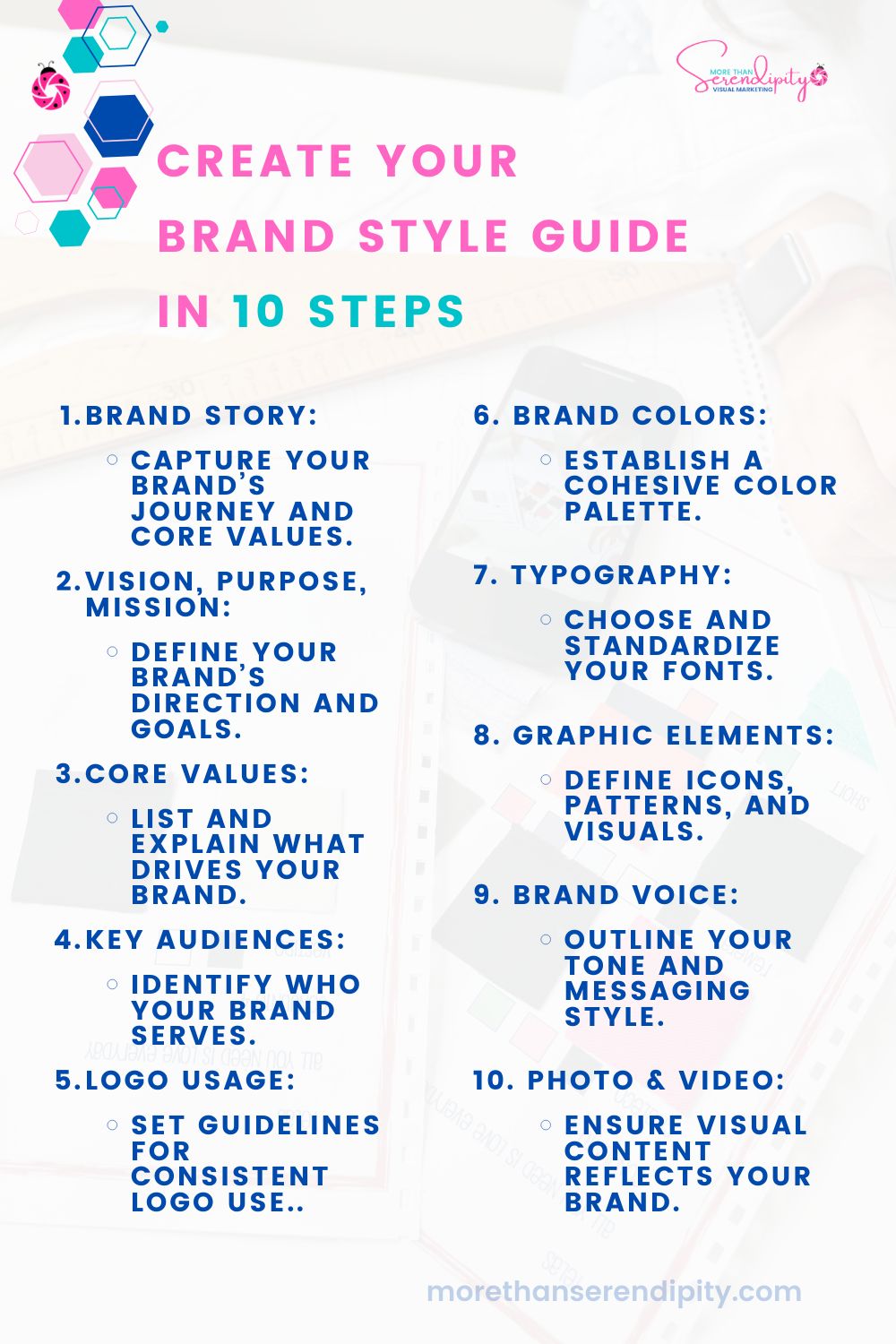
As your business grows, you may start outsourcing tasks or hiring help for marketing. Having a comprehensive brand guide ensures that everyone working on your brand—whether it’s a freelance designer, a social media manager, or an agency—understands and follows the same rules. This consistency is key to building a strong, recognizable brand.
Quick and Easy with a Canva Template
I know that creating a brand guide from scratch can seem daunting. That’s why I’ve created a Canva Template that makes it easy for you to put all these details together and create your own Brand Style Guide quickly. The template is comprehensive, covering everything we’ve discussed, but it’s also flexible—you can add any additional sections that are unique to your brand.
Ready to take your brand to the next level? CLICK HERE to get your template and follow the step-by-step instructions to create a guide that will keep your brand consistent and professional as you grow. Curious about how Ai can help you take the work and wonder out of this process??
I want to invite you to join me and the Superior Colorado Chamber of Commerce for a free webinar series on leveraging Ai for your small business. In an upcoming session, I will go over many of these steps and show you how AI can help. Plus, I will walk you through how to create your brand kit inside Canva.
Remember, consistency is the key to building a strong brand. With a well-crafted brand guide, you’ll be setting your business up for long-term success.
Happy creating!